The Future of Work & College-Going Culture: Why K–12 and Higher Education Partnerships Matter
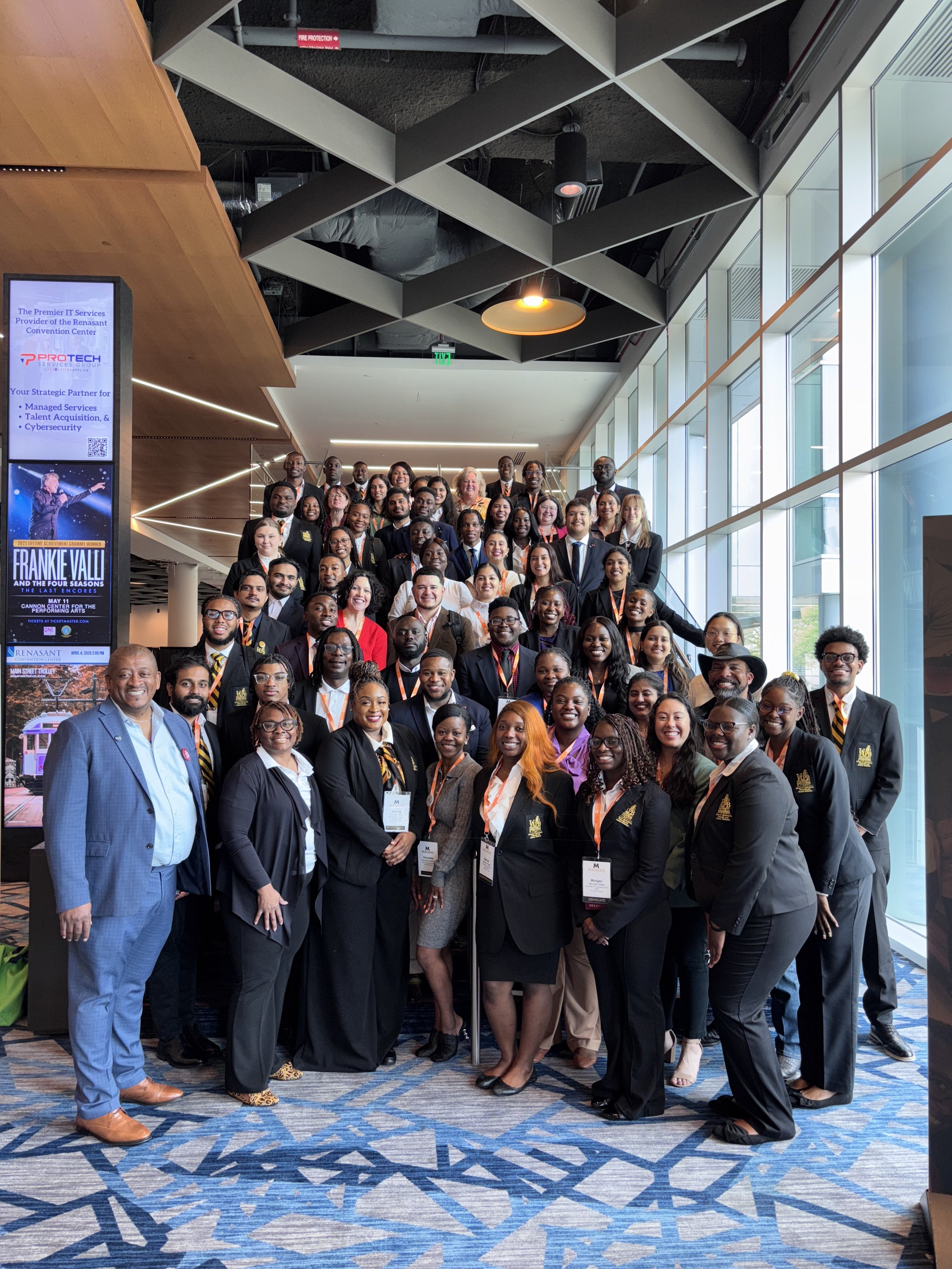
MANRRS National Conference 2025: Arkansas Representatives
The future of work isn’t waiting on permission from our school systems. It’s moving fast.
In the next few years, nearly a quarter of the U.S. workforce will be 55 and older. That’s not a talking point. That’s a transition happening in real time. If we don’t build stronger pathways now, we’ll feel it in every sector that keeps communities stable, education, healthcare, technology, and especially agriculture. According to studies, we will need to sustainably feed and clothe 10 billion people by the year 2050, a 60% increase in food production.
At the same time, agriculture and STEM careers are being reshaped by climate pressure, labor shortages, food insecurity, and rapid digital transformation. The jobs are evolving. The skills are shifting. And the path students need is no longer linear.
Here’s the hard truth: we can’t build a future-ready college-going culture using yesterday’s playbook.
You can’t “motivate” students into opportunity if the pathway is confusing, the support systems are fragmented, and learning feels disconnected from real careers. That’s especially true for rural, first-generation, and underrepresented students, who often have the talent, but not the same access to networks, exposure, and insider guidance.
That’s why K–12 and higher education partnerships aren’t “nice to have.” They are the infrastructure of a modern talent pathway.
Great examples of the impact of multidisciplinary partnerships can be seen in the work I’ve done with MANRRS. Over the last five years, we’ve transformed AGRI-STEM Pathways through our ARKANSAS COMMUNIVERSITY PARTNERSHIPS INITIATIVE. Our statewide partnership connects land-grant institutions like the University of Arkansas, University of Arkansas Pine Bluff, and other institutions, such as Arkansas Tech University and Arkansas State University, with K-12 schools and industry to close the access gap by creating continuity, from early exposure, near-peer mentorship, scholarships, leadership development, and field experiences.
Our work is grounded in a simple goal: increase the number of predominantly rural, first-generation students moving from K–12 into career-pursuing degrees and into the AGRI -STEM workforce.
That doesn’t happen through a single event or one campus visit.
It takes a support system to sustain pathways. We have over half a million in USDA-NIFA funding that moves our efforts forward.
The future of work is multidisciplinary, so the pathway must be, too
Agriculture is not “one lane.” It’s a living ecosystem.
It touches business, engineering, environmental science, nutrition, human development, data, and emerging technology. If we want students to see themselves in the future, we have to build pathways that reflect the real world students are stepping into.
That’s where multidisciplinary collaboration becomes the differentiator:
K–12 + higher ed + industry + community organizations + families working together around one shared pipeline problem: access, readiness, and success.
And for land-grant institutions, this isn’t extra work. It’s the mission, teaching, research, and service in direct partnership with communities.
Future implications
If we get partnerships right, we don’t just increase enrollment.
We can increase readiness, persistence, and alignment, and we build a workforce prepared to meet demand in high-need sectors.
If we don’t, we’ll keep recycling the same outcomes: talent shortages, uneven access, and capable students opting out because the pathway feels invisible or impossible.
Keep Scaling
This is the moment to stop treating partnerships like pilot projects.
District leaders: align coursework to real career ecosystems and invite higher ed in earlier than “senior year.”
Higher ed leaders: redesign outreach around early and sustained exposure, mentorship, and transitions, not one-time events.
Industry and community partners: sponsor experiences that give students proximity to possibility internships, site visits, mentoring, and paid internships to enhance learning.
If we want a future-ready workforce, we have to build a future-ready pathway together.
WSJR.